Dental Abscess Warning Signs You Can’t Ignore
July 26, 2026
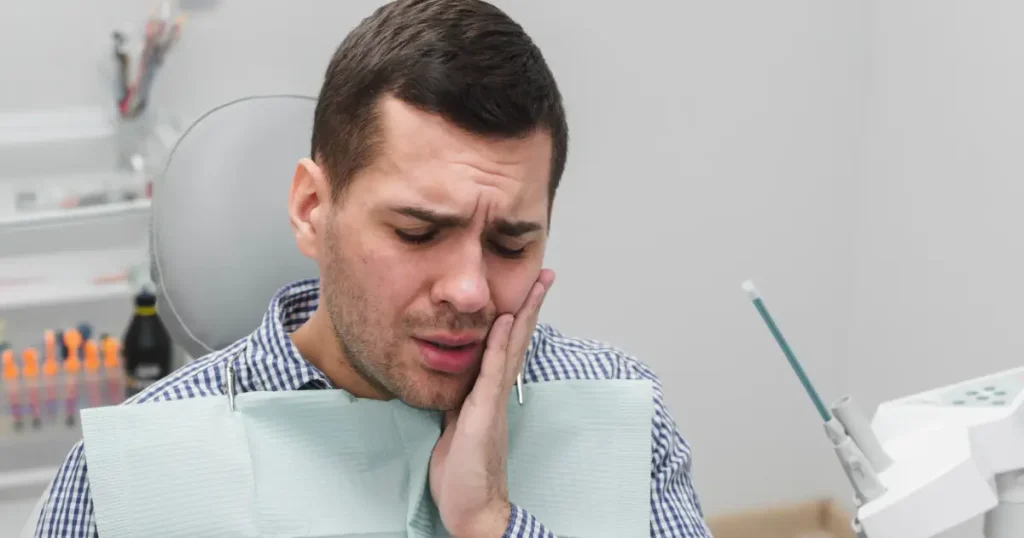
Dental Abscess Warning Signs — Why You Can’t Just “Wait It Out”
A dental abscess isn’t just another toothache. It’s a bacterial infection with pus, pressure, and the potential to spread far beyond your mouth. Left untreated, an abscess can reach your jaw, sinuses, neck, and — in rare but real cases — your bloodstream and brain.
The scariest part? Many people don’t recognize the dental abscess warning signs until the infection is well-established. They think it’s just a bad toothache. They take ibuprofen. They wait for the weekend to pass. And by Monday morning, the situation has become far more serious.
At Fairfield Dentistry & Implants, Dr. Navjot Singh, DDS treats dental abscesses same-day at our office at 1357 Oliver Rd. This guide walks through every symptom you need to know — including the ones people miss.
Think you might have an abscess? Don’t wait. Call (707) 422-3500 for same-day evaluation in Fairfield CA 94534.
What Is a Dental Abscess, Exactly?
A dental abscess is a pocket of pus caused by a bacterial infection. It forms when bacteria get inside the tooth or gum tissue and your body tries to wall off the infection. There are three main types.
Periapical abscess — the most common. Forms at the tip of the tooth root, usually from untreated decay or a cracked tooth that let bacteria reach the nerve.
Periodontal abscess — forms in the gum tissue beside a tooth, often as a complication of gum disease. Common in patients with untreated gingivitis or periodontitis.
Gingival abscess — surface-level infection on the gum, often from a foreign object (popcorn kernel, tough food fragment) trapped between teeth.
All three need professional treatment. None will resolve on their own. According to the American Dental Association, untreated dental abscesses are one of the leading causes of preventable ER visits and serious infection complications.
The 10 Warning Signs of a Dental Abscess
Here’s what to watch for — from earliest signs to full-blown emergency symptoms.
1. Severe, Persistent Tooth Pain
Not just a toothache — a deep, throbbing pain that doesn’t go away. Often starts as a mild ache and progresses to unbearable within a day or two. May radiate to the jaw, ear, or neck.
2. Sensitivity to Hot and Cold That Lingers
Sensitivity is normal in healthy teeth for a second or two. With an abscess, the pain lingers for 30+ seconds after the trigger is gone. This lingering sensitivity is a classic sign that the nerve is inflamed or dying.
3. Pain When Chewing or Biting Down
An abscessed tooth is exquisitely sensitive to pressure. Chewing food, biting down, or even lightly tapping the tooth triggers sharp pain. Many patients avoid eating on that side entirely.
4. Swelling in the Face, Cheek, or Jaw
Visible facial swelling is a serious warning sign. The infection has moved beyond the tooth and is spreading through the surrounding tissue. Depending on which tooth is affected, swelling can appear in the cheek, under the jaw, or even up toward the eye.
Any facial swelling with tooth pain needs same-day care. Rapidly spreading swelling — especially to the neck — is an emergency.
5. A Pimple-Like Bump on the Gum
Also called a “gum boil” or “fistula.” This small pimple-like bump near the affected tooth is your body’s way of trying to drain the abscess. It may burst on its own, releasing pus and providing temporary pain relief.
Warning: Even if the bump drains and the pain fades, the infection is still active. This is the most dangerous phase because people think they got better on their own.
6. Bad Taste or Smell in Your Mouth
Persistent bitter or salty taste, or foul-smelling breath that no amount of brushing fixes. This is often pus from a partially draining abscess leaking into your mouth.
7. Fever
A temperature above 100°F with a toothache means your body is fighting a systemic infection. Fever over 101°F, chills, or feeling generally unwell alongside dental pain requires urgent care — same-day or ER.
8. Swollen Lymph Nodes Under the Jaw or Neck
Tender, swollen glands under your jaw or in your neck signal that your immune system is fighting infection nearby. Combined with tooth pain, this points strongly to an abscess.
9. Difficulty Opening Your Mouth
Called “trismus,” this is a serious warning sign. When infection spreads into the muscles you use to open your mouth, opening becomes painful or impossible. This means the infection is spreading rapidly — go to the ER.
10. Trouble Swallowing or Breathing
This is a full medical emergency. Difficulty swallowing your own saliva, difficulty breathing, or any tightness in your throat means the infection may be spreading to areas that could block your airway. Call 911 immediately.
Warning Signs Ranked by Urgency
Not every abscess symptom means the same level of urgency. Here’s how to think about what needs immediate action.
🚨 Call 911 or go to the ER now: difficulty breathing, difficulty swallowing, rapidly spreading facial or neck swelling, fever above 102°F, confusion or extreme lethargy.
🔴 Call us today, no matter the day: visible facial swelling, fever between 100°F and 102°F, pus draining from the gum, unable to open mouth fully, severe pain preventing sleep or eating.
🟡 Call for a next-day appointment: persistent throbbing tooth pain, lingering sensitivity to hot or cold, tender lymph nodes, bad taste in mouth, small gum bump, pain when biting.
When in doubt, call. Our team can triage your symptoms over the phone at (707) 422-3500 and tell you exactly what to do next.
Why Antibiotics Alone Won’t Fix an Abscess
This is one of the biggest misconceptions we hear from patients. “I got antibiotics from urgent care last week. The pain went away. Doesn’t that mean it’s fixed?”
No. Antibiotics can control the infection temporarily, but they can’t fix the source. The bacteria live inside the tooth or gum, protected from the antibiotics circulating in your bloodstream. The moment you stop the antibiotic, the infection returns — often worse than before.
To actually resolve a dental abscess, we need to:
Drain the pus. A small incision releases pressure and removes infected material.
Treat the source. Either root canal therapy (to save the tooth) or extraction (if the tooth can’t be saved).
Antibiotics as support. Prescribed alongside the procedure to help your body clean up remaining bacteria — but they never work alone.
Any provider who prescribes antibiotics without treating the underlying cause is delaying, not solving, the problem.
What Happens if You Ignore an Abscess?
Here’s the sobering reality of untreated dental abscesses. Each of these consequences is documented in medical literature.
Bone loss in the jaw. The infection eats away at the bone around the tooth. Even if you eventually save the tooth, you may lose bone that supports it and neighboring teeth.
Loss of the tooth. A tooth that could have been saved with root canal early on becomes an extraction case.
Spread to the jaw and neck (Ludwig’s angina). A serious infection of the tissues below the jaw. Can compress the airway and become life-threatening.
Sinus infection. Upper tooth abscesses can spread into the maxillary sinuses, causing chronic sinus problems.
Cavernous sinus thrombosis. Rare but potentially fatal. Blood clot in the sinuses at the base of the brain, caused by upper-jaw infection spreading upward.
Sepsis. Bloodstream infection that can rapidly become life-threatening. Rare but well-documented — especially in patients with diabetes or weakened immune systems.
Brain abscess. Very rare, but the reason dental abscesses are taken so seriously by the medical community.
These aren’t scare tactics. They’re the reason our office holds emergency time open every day.
What to Do While You Wait to Be Seen
You’ve called us and you’re on your way. Here’s how to manage symptoms in the meantime.
Rinse with warm salt water. Several times a day. Reduces bacteria and eases inflammation.
Apply a cold compress externally. 15-minute intervals against your cheek slow swelling.
Take ibuprofen. Reduces both pain and inflammation better than acetaminophen for this type of pain. Follow label dosing.
Stick to soft, lukewarm foods. Hot, cold, and hard foods all worsen the pain. Soup, yogurt, and smoothies are your friends.
Do NOT try to pop or drain the abscess yourself. This pushes bacteria deeper into tissue and can spread the infection dangerously.
Do NOT put aspirin on the gum. It burns the tissue. Swallow it with water instead.
Elevate your head at night. Reduces throbbing when you’re trying to sleep.
How We Treat Dental Abscesses in Fairfield
Every abscess is different, but here’s what typically happens when you arrive at our Fairfield office.
Digital X-ray and exam. Shows us the source of the infection, whether the bone is affected, and how deep the abscess has spread.
Drainage. Dr. Singh numbs the area, makes a small incision, and releases the pus. Patients often report immediate pain relief the moment pressure is released. Cost typically runs $200 to $400.
Source treatment. Depending on the tooth’s condition, we either perform root canal therapy to save the tooth ($800 to $1,500) or remove the tooth completely ($150 to $500 for a simple extraction).
Antibiotics prescribed. To help your body clean up remaining bacteria. Common choices include amoxicillin, penicillin, or clindamycin for penicillin-allergic patients.
Follow-up care. You’ll return in 1 to 2 weeks to check healing. If a root canal was performed, we’ll place a permanent crown 2 to 3 weeks after.
Replacement planning if extraction was needed. Dr. Singh has completed over 4,000 implant cases. If your tooth couldn’t be saved, we’ll plan implant placement once the socket heals (usually 6 to 8 weeks).
Serving Fairfield and Surrounding Communities
Our office at 1357 Oliver Rd, Fairfield, CA 94534 is easy to reach from anywhere in Solano County. We treat dental abscess emergencies same-day for patients from Vacaville, Suisun City, Dixon, Vallejo, Benicia, Napa, and Travis AFB — most within a 15 to 25 minute drive.
If you’re stationed at Travis AFB, we’re the closest civilian emergency dental practice to base. Bring your insurance and we’ll handle the rest.
For non-emergency care including cleanings, checkups, and cavity prevention, visit our full-service practice at Fairfield Dentistry & Implants. Patients in the Yuba City and Sacramento area can also reach our emergency team at Plumas Family Dentistry.
Lost a tooth to an abscess? Learn about affordable replacement at Yuba City Implant Center, or ask about implants starting from $1,399 here in Fairfield.
For full details on our emergency abscess treatment protocol, visit our dental abscess service page.
Frequently Asked Questions
1. Can a dental abscess kill you?
Yes, in rare cases. Untreated abscesses can spread to the neck, sinuses, bloodstream, or brain and cause life-threatening infections like Ludwig’s angina, sepsis, or cavernous sinus thrombosis. Deaths from dental abscesses are rare in the modern era but still happen — especially in patients who delay care. This is why we treat every abscess as urgent.
2. How fast does a dental abscess develop?
Symptoms often develop over 1 to 3 days. Early signs include tooth sensitivity and mild pain. Within 24 to 48 hours, the pain typically becomes severe. Facial swelling can appear rapidly — sometimes within hours. Once you notice warning signs, don’t wait.
3. Will a dental abscess drain and heal on its own?
Sometimes an abscess partially drains through a “gum boil,” which temporarily reduces pain. But this doesn’t mean the infection is gone. The bacteria continue to damage tissue and bone silently. Professional treatment is always needed to fully resolve an abscess.
4. Can I take antibiotics from a leftover prescription for my abscess?
No. Wrong dose, wrong antibiotic, incomplete course — all can make the infection worse or create resistant bacteria. Always call a dentist for proper diagnosis and treatment. Even if you think you know what antibiotic worked before, self-treating an abscess is risky.
5. What does a dental abscess feel like versus a regular toothache?
A regular toothache is usually triggered by hot, cold, sweet, or biting. Pain fades within seconds. An abscess causes constant, throbbing pain — often described as a heartbeat inside the tooth. Pain worsens when you lie down, doesn’t fade with usual triggers gone, and is often accompanied by swelling, bad taste, or fever.
6. How much does dental abscess treatment cost in Fairfield?
An emergency exam runs $75 to $150. Drainage of the abscess costs $200 to $400. Root canal to save the tooth runs $800 to $1,500, plus a crown afterward ($1,000 to $1,500). Extraction is $150 to $500. We give upfront estimates, accept most insurance, and offer CareCredit financing.